
Posted on Nov 24, 2026, 10:20:21 PM by AGC Heat Transfer | 11 min. read
To reduce plate heat exchanger downtime, catch problems before they stop the line. Open and inspect plates every three to six months, run a dye-test PlateCheck once a year, keep CIP consistent, and replace gaskets on a schedule. When maintenance is due, a rental plate pack keeps you running while your own plates are regasketed.
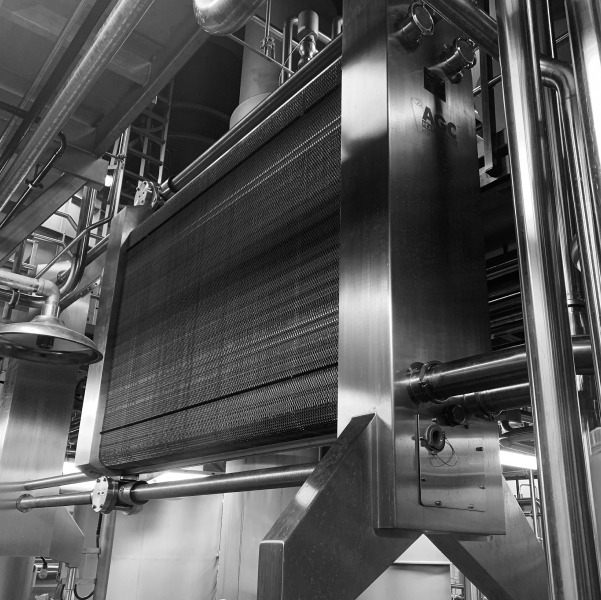
Unplanned downtime is expensive in food and beverage. An hour of it costs fast-moving consumer goods (FMCG) manufacturers about $36,000, according to the Siemens True Cost of Downtime 2024 report. The same report found FMCG was the only sector it surveyed where hours lost to unplanned downtime haven't come down since 2019.
Your plate heat exchanger sits at the center of that risk. When an HTST or Cooler goes down, everything upstream and downstream of it waits. The good news: plate heat exchanger problems usually give you warning signs first, and a steady heat exchanger maintenance plan turns surprise shutdowns into scheduled ones.
What Causes Plate Heat Exchanger Downtime?
Unplanned stops usually trace back to fouling, gasket failure, or plate damage, and frame problems can make all three worse. Each one starts small and gets worse the longer it runs.
- Fouling. Product residue, mineral scale, or protein buildup coats the plates and narrows the flow channels. Heat transfer drops, pressure climbs, and eventually the unit can't hit its temperatures.
- Gasket failure. Gaskets harden, crack, or lose their seal over time, especially with high temperatures and aggressive cleaning chemicals. A failed gasket shows up as an external leak or, worse, a path between product and service fluid.
- Plate damage. Cracks, pinholes, and corrosion can let product and service fluids mix. Many of these flaws are too small to see, so they often go unnoticed until a leak test or an audit finds them.
- Frame issues. A frame tightened past its specified dimension can crush gaskets and stress plates, while a loose frame leaks. Our guide to plate heat exchanger frame maintenance covers what to watch.
What Are the Early Warning Signs of a Problem?
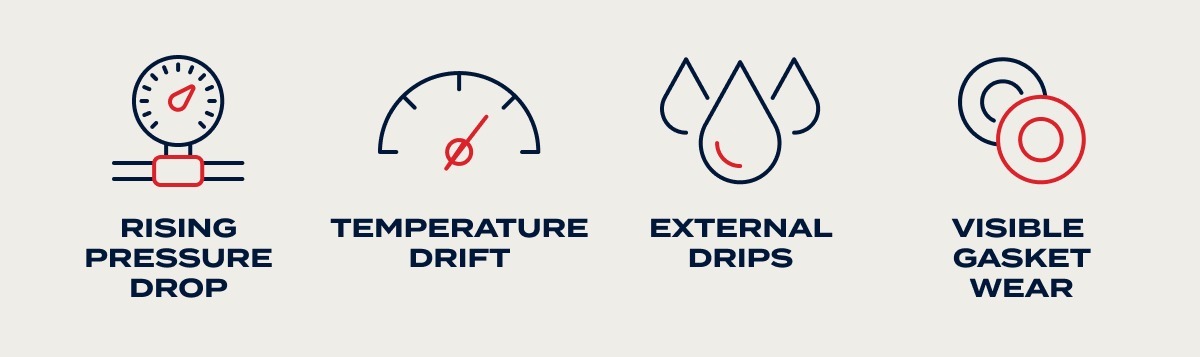
Your plate heat exchanger usually tells you something is wrong before it fails. Your operators are the first line of defense, so make sure they know what to watch for:
- Rising pressure drop. If pressure across the unit keeps climbing between cleanings, fouling is likely narrowing the channels.
- Temperature drift. Outlet temperatures that are slipping away from setpoint, or a unit working harder to reach them, point to fouling or a plate problem.
- External drips or weeping. Moisture at the plate pack edges usually means a gasket is losing its seal.
- Visible gasket wear. Gaskets that look flattened, hard, cracked, or out of their grooves at inspection are due for replacement.
When you spot one of these signs, our plate heat exchanger troubleshooting guide walks through the likely causes and fixes.
What Should a Heat Exchanger Maintenance Schedule Include?
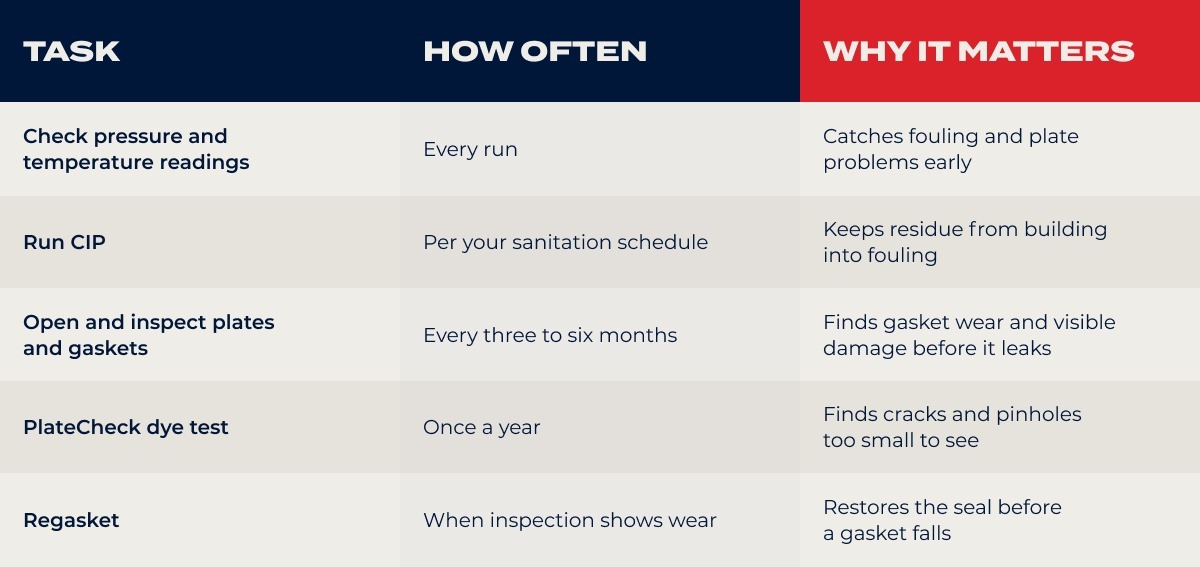
AGC generally recommends opening and inspecting a plate heat exchanger every three to six months, with a full PlateCheck once a year. Plants running aggressive chemicals, high temperatures, or products with suspended solids may need to inspect more often. Here's how a basic schedule fits together:
|
Task |
How Often |
Why It Matters |
|
Check pressure and temperature readings |
Every run |
Catches fouling and plate problems early |
|
Run CIP |
Per your sanitation schedule |
Keeps residue from building into fouling |
|
Open and inspect plates and gaskets |
Every three to six months |
Finds gasket wear and visible damage before it leaks |
|
PlateCheck dye test |
Once a year |
Finds cracks and pinholes too small to see |
|
Regasket |
When inspection shows wear |
Restores the seal before a gasket fails |
How Does a PlateCheck Prevent Unplanned Downtime?
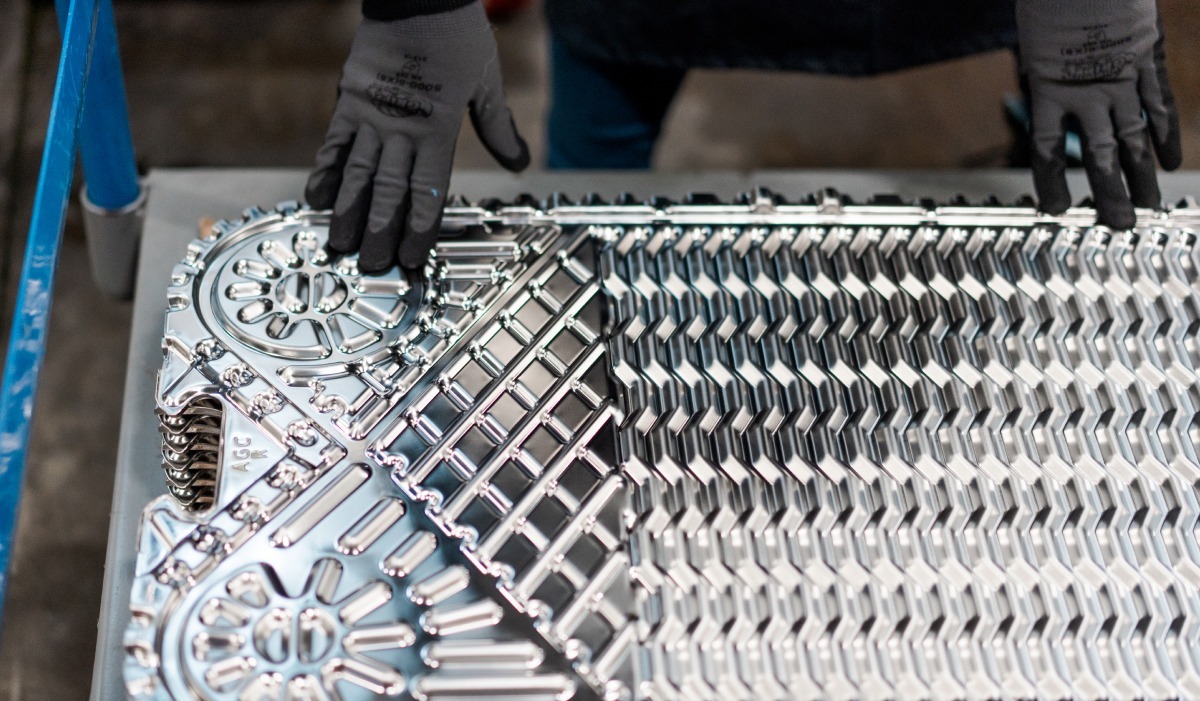
A PlateCheck finds the plate damage you can't see. AGC's food-safe dye testing meets 3-A standard 11-09, checks 100% of each plate's surface, and pinpoints the exact plate and location of any leak. Learn how dye testing compares to helium testing.
Each PlateCheck report rates your plate, gasket, frame, and CIP condition. That gives you documentation for your next audit and a clear list of what to replace at your next planned shutdown, instead of finding out mid-run. For what to look for between PlateChecks, see our guide to detecting damage in heat exchanger plates.
How Do You Keep CIP From Becoming a Downtime Problem?
Consistent CIP is the best defense against fouling. When cleaning cycles get cut short or chemistry drifts, residue builds up run after run until the unit can't keep up.
Keep your cleaning chemistry, temperatures, and cycle times consistent, and check them whenever product or production volume changes. Our CIP guide and our overview of why proper heat exchanger cleaning matters cover the details.
How Can You Shorten Downtime When Maintenance Is Due?
Even planned maintenance takes your plate heat exchanger offline. These steps keep that window as short as possible:
- Use rental plate packs. AGC rental plate packs keep your line running while your own plates are out for regasketing. Each rental plate is cleaned, tested, and regasketed between uses.
- Schedule regasketing with planned shutdowns. Use your inspection and PlateCheck findings to plan regasketing around downtime you already have on the calendar.
- Make the frame easy to open. A hydraulic frame opens at the press of a button, which cuts the time and labor it takes to reach your plates.
- Keep critical spares on site. A spare set of gaskets for your most important unit means a failed seal doesn't have to wait on an order.
- Train your team. AGC's PHE 101 course teaches your crew proper assembly, troubleshooting, and how to verify CIP effectiveness, on site and on your own equipment.
When Should You Regasket, Replace Plates, or Replace the Unit?
Regasket when inspection shows worn gaskets but the plates are sound. AGC regaskets plates for nearly all makes and models, and the process restores them to like-new condition.
Replace plates when a PlateCheck or inspection finds cracks, pinholes, or corrosion that can't be repaired. If you're dealing with repeat failures, a frame that's hard to maintain, or capacity that no longer matches your production, it may be time to look at a new plate heat exchanger built around your process.
Key Takeaways
- Plate heat exchanger downtime usually traces back to fouling, gasket failure, or plate damage, and each one tends to show warning signs first.
- Rising pressure drop, temperature drift, and external drips are the signs operators should watch every run.
- AGC generally recommends opening and inspecting a plate heat exchanger every three to six months, with a PlateCheck once a year.
- Rental plate packs, planned regasketing, hydraulic frames, on-site spares, and a trained team keep maintenance windows short.
Next Steps
The cheapest downtime is the downtime you plan. A PlateCheck shows you where your plates stand today, so your next shutdown is on your schedule. Schedule a PlateCheck or request a service quote for regasketing and repairs.
Sources
- Siemens, "The True Cost of Downtime 2024," Senseye Predictive Maintenance. Survey of 181 maintenance, engineering, and IT professionals at large industrial organizations, April 2019 to March 2023.
Frequently Asked Questions About Maintenance For Plate Heat Exchangers
Topics: Maintenance | Service | Food Safety