
Posted on May 20, 2026, 4:15:15 PM by AGC Heat Transfer | 7 min. read
When plate damage goes undetected, the consequences extend far beyond a simple equipment malfunction. Cross-contamination can ruin entire product batches. Unplanned downtime disrupts production schedules. Energy costs climb as compromised plates struggle to transfer heat effectively.
The difference between a minor maintenance issue and a plant-wide crisis often comes down to one factor — early detection.
Common Types of Damage and Their Warning Signs
Understanding what to look for during inspections is the first step in protecting your heat exchanger investment. Plate damage manifests in several distinct ways, each with its own visual indicators and risk profile.
1. Corrosion
Understanding these different corrosion types helps maintenance teams catch problems before they compromise system integrity.
Pitting corrosion
These are frequently hard to see without close inspection or magnification and commonly develop near gasket grooves or areas with stagnant fluid. Despite their small size, pitting corrosion poses a high risk because it can penetrate completely through the plate, causing cross-contamination between process streams.
How to identify pitting corrosion: Tiny pinholes or small round craters on the plate surface — often appearing as dark spots or small, shiny pits.
Crevice corrosion
Occurs in tight gaps where cleaning solutions or product residues become trapped with limited oxygen exposure. This localized damage in gasket-sealing areas is often mistaken for simple staining, but it worsens over time and presents a medium to high risk for leaks.
How to identify crevice corrosion: Dark discoloration or rust streaks along gasket grooves or behind gaskets.
Surface corrosion
Results from exposure to aggressive chemicals or improper cleaning agents — such as acid that's too strong or applied at excessive temperatures. While moderate in immediate risk, uniform corrosion reduces plate thickness and eventually leads to leaks or cracks.
How to identify surface corrosion: Look for even, dull etching or discoloration across large plate areas, with noticeable loss of surface polish. The plate may feel rough and show color changes to brown, grey, or black.
Stress corrosion
Cracking combines mechanical stress with chemical exposure, often involving chlorides.
How to identify stress corrosion: Hairline cracks become visible on or near bent areas, sharp corners, or high-stress regions. These cracks may appear subtle, sometimes branching across the surface, but they pose a high risk for sudden leaks or catastrophic failure.
2. Mechanical Wear
Contact point wear represents one of the most common forms of mechanical damage encountered across industries. This wear pattern develops at points where plates touch during operation as thermal expansion occurs. While some contact wear is expected, excessive or rapid degradation signals problems with pressure settings, plate alignment, or operating conditions.
How to identify mechanical wear: Physical cracks, deformation, and pressure damage can result from improper handling during maintenance, over-tightening of tie bolts, or pressure surges during operation. Deformed plates may show visible warping or bulging that prevents proper sealing. Cracks often radiate from high-stress points or areas of impact damage.
3. Erosion
Unlike contact wear, erosion develops from the fluid itself — particularly in systems handling fluids with suspended solids or operating at high velocities. Over time, erosion can thin plates to the point of failure.
How to identify erosion: Look for distinctive wear patterns that follow flow paths across the plate surface. These patterns typically appear as smoothed or thinned areas along channels where fluid velocity is highest.
4. Fouling and Scaling
It's important to distinguish fouling and scaling from actual plate damage. While both reduce heat transfer efficiency and require cleaning, they don't necessarily indicate plate damage. However, persistent fouling or scaling can hide underlying corrosion or create conditions that accelerate damage.
How to identify fouling and scaling: For fouling, look for accumulation of unwanted materials on plate surfaces — product residues or particulates. Scaling will appear as mineral deposits that build up from hard water or process fluids.
5. Gasket Degradation
Gasket compression damage and impression marks occur when gaskets are over-compressed or when plates operate beyond their pressure ratings.
How to identify gasket degradation: Look for deep grooves or impressions in the plate surface that mirror gasket patterns. These marks indicate that gasket material has been forced into the plate surface, potentially compromising the seal and creating stress points that may develop into cracks.
Conducting Thorough Inspections
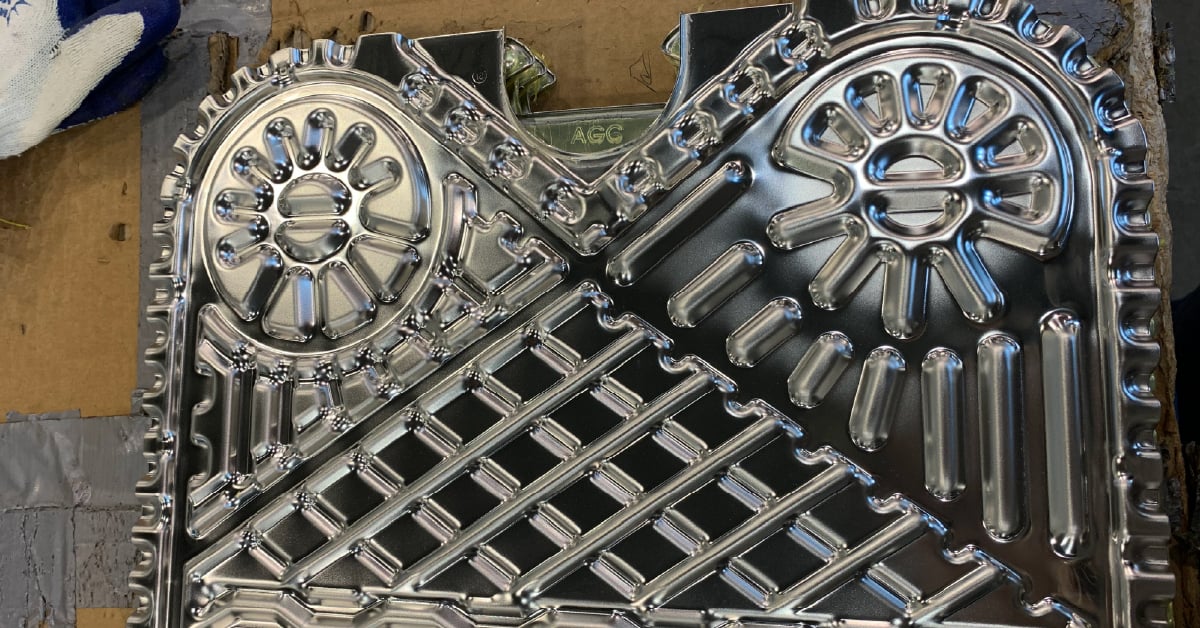
Effective damage detection relies on consistent inspection protocols and thorough documentation. Generally, a heat exchanger should be opened and inspected every three to six months, with an AGC Platecheck scheduled yearly. Aggressive chemicals, high temperatures, or fluids with suspended solids may warrant more frequent inspection intervals.Safety First
During inspections, safety must come first. Maintenance teams should always wear proper PPE, especially gloves, when handling plates that may have sharp edges, chemical residues, or biological contamination.
Documentation Methods
Systematic documentation proves critical for tracking damage progression over time. AGC's plate grading system compares the plate's condition in the previous report with the most recent inspection to assign an accurate grade. This comparative approach reveals degradation trends that might otherwise go unnoticed during a single inspection.
Photograph each plate from consistent angles and lighting conditions. Note the specific location of any damage using plate numbering systems. Record measurements of wear depth, pit diameter, or crack length where possible. This documentation creates a historical record that supports data-driven decisions about remaining service life. It also gives you something equally valuable: an independent, third-party record of your heat exchanger's health that stands on its own.
Dye Testing
Dye penetrant testing is the only 3A-approved method that provides definitive detection of microscopic cracks and pinhole leaks. This method involves applying a food-safe, colored, or fluorescent dye to the plate surface, allowing it to penetrate into surface-breaking defects, then removing excess dye and applying a developer that draws the dye back out, making even tiny cracks visible.
Assessing Damage Severity
Not all damage requires immediate action. Understanding how to classify damage severity helps prioritize maintenance resources and budget effectively.
Critical damage includes any condition that causes or imminently threatens cross-contamination, product loss, or safety hazards. Pinhole leaks, through-wall cracks, and severe structural deformation fall into this category and demand immediate attention.
Non-critical damage encompasses issues that reduce efficiency or will eventually require intervention but don't pose immediate operational threats. Surface corrosion that hasn't penetrated deeply, minor contact wear, or early-stage pitting may allow continued operation with monitoring.
Preventative Best Practices
Prevention beats repair every time — both in cost and in avoiding unplanned downtime.
Regular Inspection Schedules
Establish and maintain consistent inspection intervals based on your specific operating conditions. Document every inspection thoroughly to build the historical data necessary for trend analysis. Don't wait for problems to appear — proactive inspection catches issues while they're still manageable.
Operational Adjustments
Many forms of plate damage are preventable through operational modifications. Operating within design pressure and temperature limits prevents stress-related failures. Proper CIP procedures using manufacturer-recommended chemicals at correct concentrations and temperatures prevent chemical damage while ensuring thorough cleaning. Gradual startup and shutdown procedures minimize thermal shock. Water treatment to control scaling reduces both fouling and the aggressive cleaning needed to remove deposits. Monitor and control fluid velocity to minimize erosion, especially in systems handling abrasive materials.

How AGC Supports Your Heat Exchanger Performance
AGC's PlateCheck program uses food-safe testing protocols compliant with 3-A standard 11-09, examining every square inch of plate surface area to pinpoint leak locations with precision. Our assessments extend beyond the plates themselves to include frame integrity, gasket condition, and CIP system effectiveness: delivering a complete picture of heat exchanger health. These findings are documented as objective, third-party records, giving you audit-ready evidence of due diligence when it matters most
Schedule your PlateCheck service with AGC today and gain the peace of mind that comes from knowing exactly what's happening inside your PHE — before problems impact your bottom line.
Planning for a formulation or volume change? Check out our blog for tips.
Topics: Maintenance | Service